| # panicparse |
| |
| Parses panic stack traces, densifies and deduplicates goroutines with similar |
| stack traces. Helps debugging crashes and deadlocks in heavily parallelized |
| process. |
| |
| [](https://pkg.go.dev/github.com/maruel/panicparse/v2/stack) |
| [](https://codecov.io/gh/maruel/panicparse) |
| [](https://github.com/nikolaydubina/go-recipes#-pretty-print-panic-messages) |
| |
| |
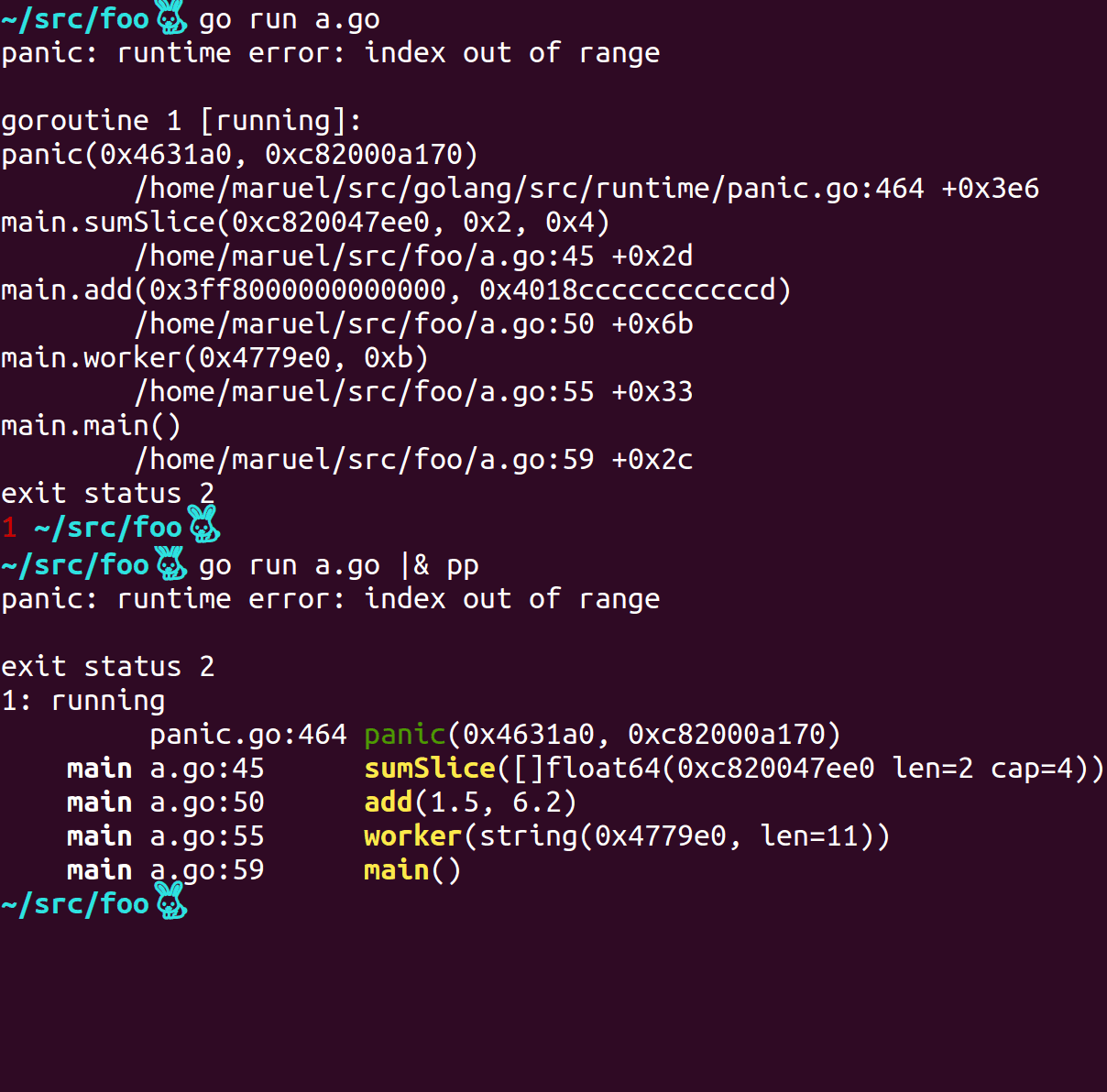
| panicparse helps make sense of Go crash dumps: |
| |
|  |
| |
| |
| ## Features |
| |
| * Race detector support, e.g. it can parse output produced by `go test -race` |
| * HTML export. |
| * Easy to use as an [HTTP Handler |
| middleware](https://pkg.go.dev/github.com/maruel/panicparse/v2/stack#example-package-HttpHandlerMiddleware). |
| * High performance parsing. |
| * [HTTP web server](https://pkg.go.dev/github.com/maruel/panicparse/v2/stack/webstack#SnapshotHandler) |
| that serves a very tight and swell snapshot of your goroutines, much more |
| readable than [net/http/pprof](https://pkg.go.dev/net/http/pprof). |
| * >50% more compact output than original stack dump yet more readable. |
| * Deduplicates redundant goroutine stacks. Useful for large server crashes. |
| * Arguments as pointer IDs instead of raw pointer values. |
| * Pushes stdlib-only stacks at the bottom to help focus on important code. |
| * Parses the source files if available to augment the output. |
| * Works on any platform supported by Go, including Windows, macOS, linux. |
| * Full go module support. |
| * Requires >=go1.17. Use v2.3.1 for older Go versions. |
| |
| |
| ## Installation |
| |
| go install github.com/maruel/panicparse/v2/cmd/pp@latest |
| |
| |
| ## Usage |
| |
| ### Piping a stack trace from another process |
| |
| #### TL;DR |
| |
| * Ubuntu (bash v4 or zsh): `|&` |
| * macOS, [install bash 4+](README.md#updating-bash-on-macos), then: `|&` |
| * Windows _or_ macOS with stock bash v3: `2>&1 |` |
| * [Fish](http://fishshell.com/) shell: `&|` |
| |
| |
| #### Longer version |
| |
| `pp` streams its stdin to stdout as long as it doesn't detect any panic. |
| `panic()` and Go's native deadlock detector [print to |
| stderr](https://golang.org/src/runtime/panic1.go) via the native [`print()` |
| function](https://golang.org/pkg/builtin/#print). |
| |
| |
| **Bash v4** or **zsh**: `|&` tells the shell to redirect stderr to stdout, |
| it's an alias for `2>&1 |` ([bash |
| v4](https://www.gnu.org/software/bash/manual/bash.html#Pipelines), |
| [zsh](http://zsh.sourceforge.net/Doc/Release/Shell-Grammar.html#Simple-Commands-_0026-Pipelines)): |
| |
| go test -v |&pp |
| |
| |
| **Windows or macOS native bash** [(which is |
| 3.2.57)](http://meta.ath0.com/2012/02/05/apples-great-gpl-purge/): They don't |
| have this shortcut, so use the long form: |
| |
| go test -v 2>&1 | pp |
| |
| |
| **Fish**: `&|` redirects stderr and stdout. It's an alias for `2>&1 |` |
| ([fish piping](https://fishshell.com/docs/current/language.html#piping)): |
| |
| go test -v &| pp |
| |
| |
| **PowerShell**: [It has broken `2>&1` redirection](https://connect.microsoft.com/PowerShell/feedback/details/765551/in-powershell-v3-you-cant-redirect-stderr-to-stdout-without-generating-error-records). The workaround is to shell out to cmd.exe. :( |
| |
| |
| ### Investigate deadlock |
| |
| On POSIX, use `Ctrl-\` to send SIGQUIT to your process, `pp` will ignore |
| the signal and will parse the stack trace. |
| |
| |
| ### Parsing from a file |
| |
| To dump to a file then parse, pass the file path of a stack trace |
| |
| go test 2> stack.txt |
| pp stack.txt |
| |
| |
| ## Tips |
| |
| ### Disable inlining |
| |
| The Go toolchain inlines functions when it can. This causes traces to be less |
| informative. Optimization also interfere with traces. You can use the following |
| to help diagnosing issues: |
| |
| go install -gcflags '-N -l' path/to/foo |
| foo |& pp |
| |
| or |
| |
| go test -gcflags '-N -l' ./... |& pp |
| |
| |
| Run `go tool compile -help` to get the full list of valid values for -gcflags. |
| |
| |
| ### GOTRACEBACK |
| |
| By default, [`GOTRACEBACK`](https://golang.org/pkg/runtime/) defaults to |
| `single`, which means that a panic will only return the current goroutine trace |
| alone. To get all goroutines trace and not just the crashing one, set the |
| environment variable: |
| |
| export GOTRACEBACK=all |
| |
| or `set GOTRACEBACK=all` on Windows. Probably worth to put it in your `.bashrc`. |
| |
| |
| ### Updating bash on macOS |
| |
| Install bash v4+ on macOS via [homebrew](http://brew.sh) or |
| [macports](https://www.macports.org/). Your future self will appreciate having |
| done that. |
| |
| |
| ### If you have `/usr/bin/pp` installed |
| |
| If you try `pp` for the first time and you get: |
| |
| Creating tables and indexes... |
| Done. |
| |
| and/or |
| |
| /usr/bin/pp5.18: No input files specified |
| |
| you may be running the _Perl PAR Packager_ instead of panicparse. |
| |
| You have two choices, either you put `$GOPATH/bin` at the beginning of `$PATH` |
| or use long name `panicparse` with: |
| |
| go install github.com/maruel/panicparse/v2@latest |
| |
| then using `panicparse` instead of `pp`: |
| |
| go test 2> panicparse |
| |
| Hint: You may also use shell aliases |
| |
| alias gp=panicparse |
| go test 2> gp |
| |
| alias p=panicparse |
| go test 2> p |
| |
| |
| ### webstack in action |
| |
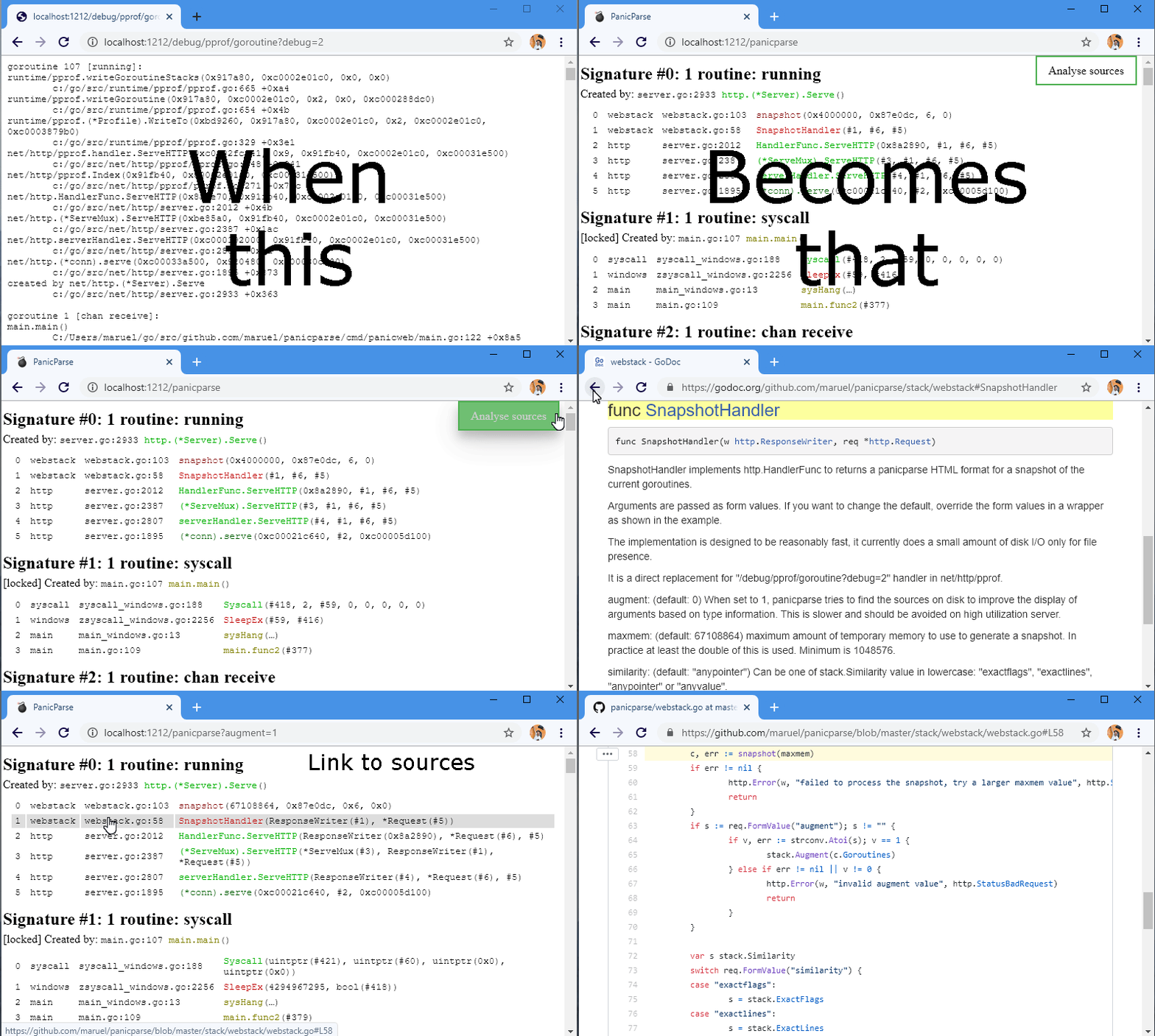
| The |
| [webstack.SnapshotHandler](https://pkg.go.dev/github.com/maruel/panicparse/v2/stack/webstack#SnapshotHandler) |
| http.Handler enables glancing at at a snapshot of your process trivially: |
| |
|  |
| |
| |
| ## Authors |
| |
| `panicparse` was created with ❤️️ and passion by [Marc-Antoine |
| Ruel](https://github.com/maruel) and |
| [friends](https://github.com/maruel/panicparse/graphs/contributors). |
